Sunday, July 18, 2010

Some of the things we did at camp.


We did crafts- these were friendship bracelets.


Rode horses.  City kids in China are remarkably detached from nature and animals.  Most of the girls rode but several of the boys said that they were afraid and wouldn't get on a horse.  We tried to learn how to say "Man up" in Chinese but were unsuccessful.


We had rally's with songs every day.  We did old camp songs like "Father Abraham,"  "Deep and Wide" and others.  The favorite song was "He knows My Name."  Seeing this group of children sing this song was very moving.


We had a bonfire on top of the hill across from the camp.  We roasted corn flavored marshmallows and put them on digestive biscuits with Dove chocolate for s-more's.  They weren't bad.


The boys were boys.


Elisabeth dancing with warm hearted Noomin who works at the camp.


Mongolian Mary, Helen ( a remarkable high school student) and Noomin dance.


The camp workers.


Friends.  These two Mongolian girls had such sweet natures.  I really enjoyed them.


We saw sunsets like this almost every day.  This is looking in the direction of Russia.


Aside from our nature curriculum, we did three days of holidays- New Years, Christmas and Easter.  For Christmas, we decorated a Christmas tree.  Really fun.


Oh, it was a good two weeks and we were sad to leave.


Wednesday, July 14, 2010

What we are doing here.

We are at this camp to spend two weeks sharing our lives and hearts with Mongolian and Chinese youth.  We live with them in yurts, eat each meal, play games, teach English and spend our free time with them.  It's exhausting but very satisfying.   This is our second time at the camp and we've really enjoyed it even more this time.  Having some Chinese language makes a big difference.  Being used to China and Chinese culture makes a big difference.  It's just been a good time for us.
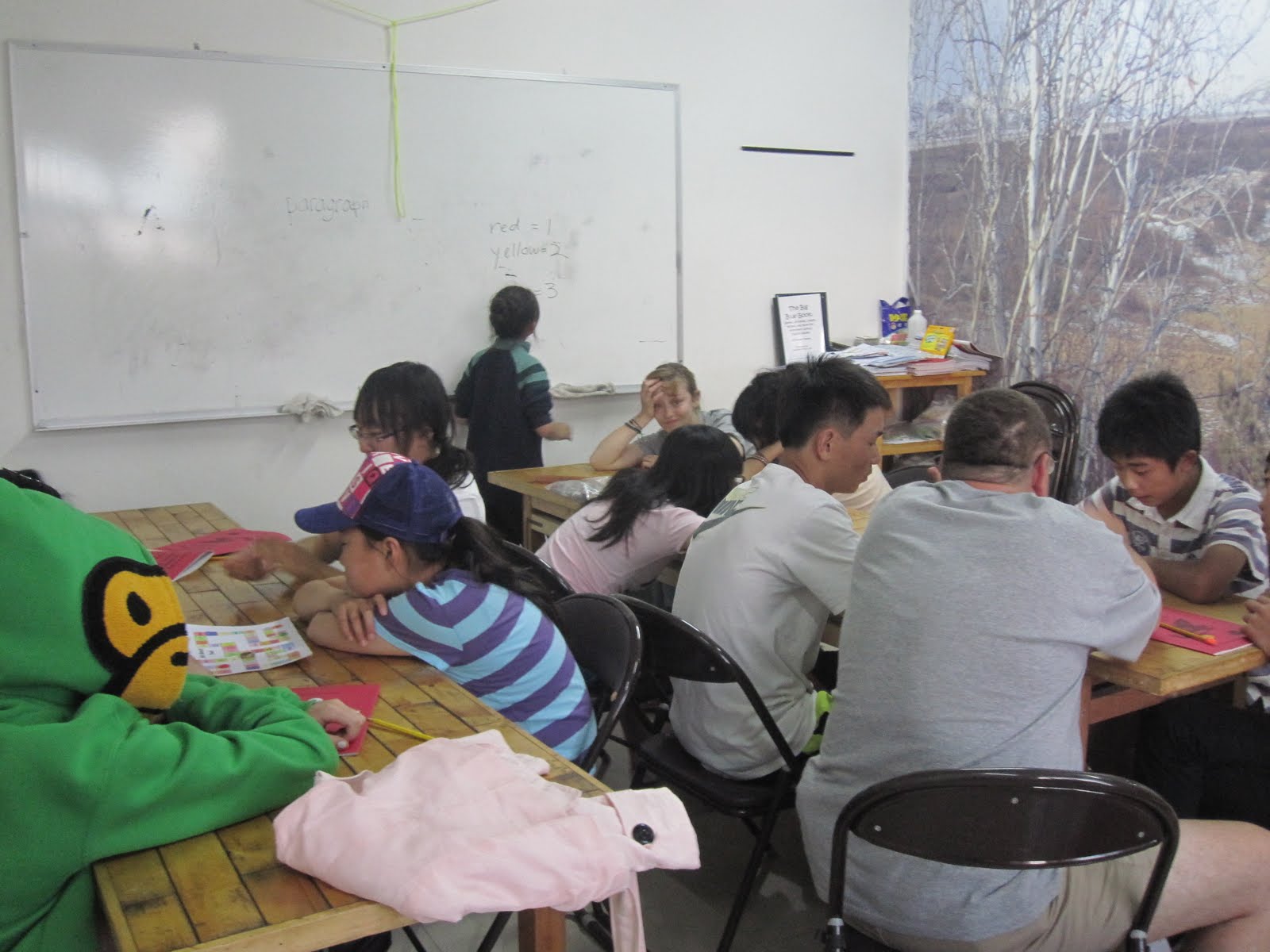
We've been teaching from a nature curriculum, discussing habitats, owls, hawks, fish and other animals.  It's been great to get these city kids out in nature and slowing down.  Getting them to turn off their cell phones is another matter.  They are glued to their phones calling their mother's and father's at every opportunity.  Most are fairly coddled and few have good healthy boundaries in their families.  The Mongolian kids come from tougher and poorer backgrounds and have sweet dispositions.  There is tension between the two groups but as a whole, there were few issues.  
There were some interesting issues at the camp, due to the multilingual nature.  When the kids played charades to act out their vocabulary, some would mouth the words in their own languages.  When we did spelling contests,  some pulled out their dictionaries to check their spelling!  We just had to laugh and not take it to seriously, while maintaining healthy boundaries.

Practicing reading.


Playing games.


Teaching kids to play Splat.


Crafts-beads.


Chinese, American and Mongolian girls.

Tuesday, July 13, 2010

The camp.


The camp

The lodge


The store.


The inside of a yurt.


The outdoor classrooms.


The animals.


The spectacular sunsets.


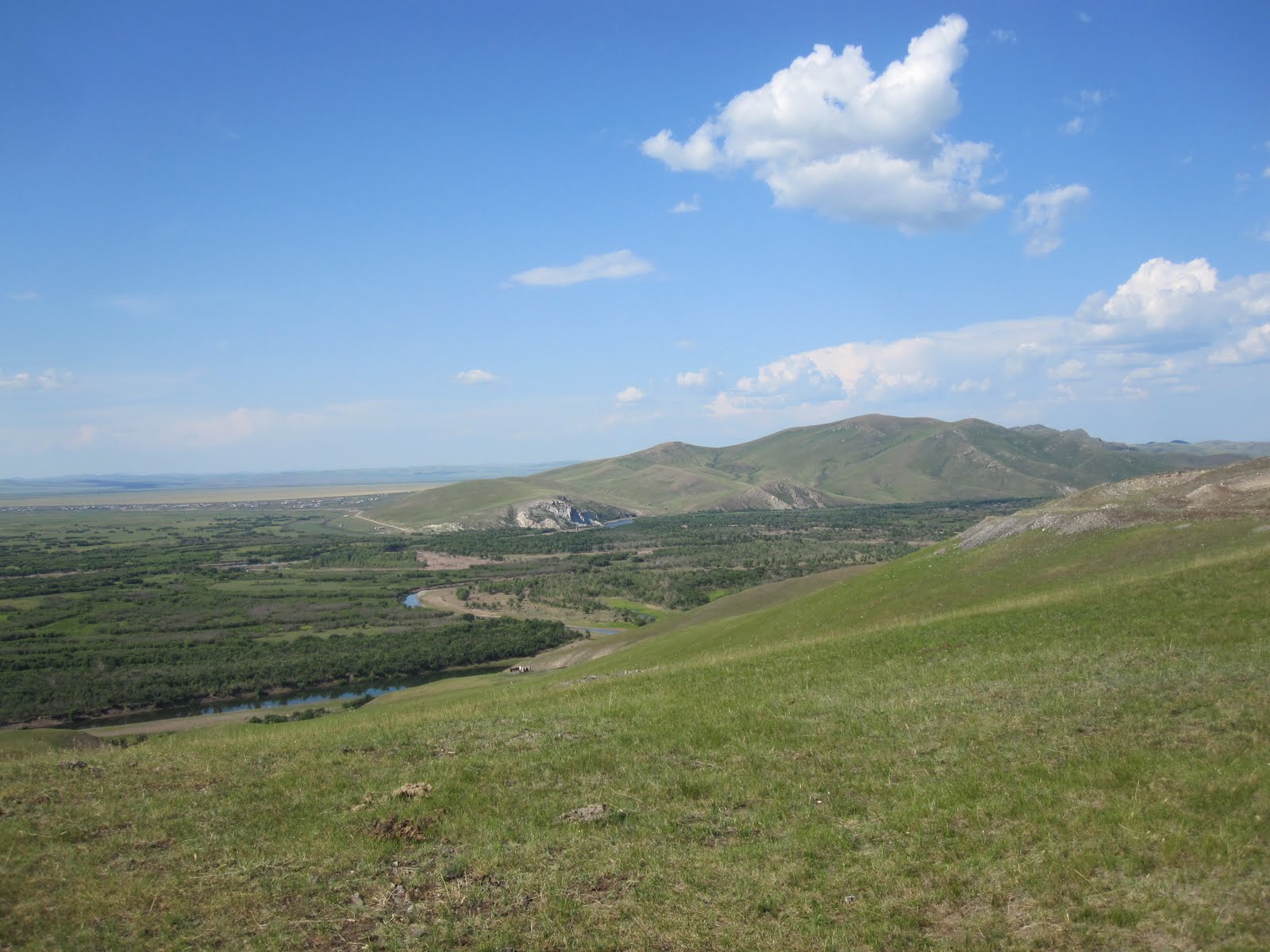
The scenery and nature.

It's a very special place.

Thursday, July 8, 2010

Where are we?

We are at Camp Shamineau East.  We are here to teach English and share our lives. Shamineau East is in Inner Mongolia.    Inner Mongolia is a part of China, not the country Mongolia.  However, there are Mongolian's and Han Chinese as well as Russian's doing business and other Chinese minorities.  This part of Inner Mongolia is sparsely populated grassland and it is truly beautiful.  The sunsets are spectacular every night.   Since we are so far North, the sun rises around 3:30 AM and goes down after 9:00.  Last night, I went outside around 10:30 and saw a clear black sky with sharp white stars.  The Milky Way was spectacular and the Big Dipper clearly defined.  I saw two shooting stars.  It was spectacular.
There isn't a lot of money in this part of Inner Mongolia and few parents can afford to send their children to camp here.  The camp is supported by the generosity of others who want to help these children progress and grow.
The children here are a mix of Han Chinese and Mongolian.  There is separation and some tension.  The kids are an odd mix of very mature and astoundingly immature.  Many are only children and quite pampered.  Few know how to pick up after themselves. Most have nicer cell phones than I do (cell phones and cell phone service is cheap here).  There is a lot of training to do.
The kids are here to learn and practice English.  We have a basic curriculum but have worked on expanded it.

We brought two more-or-less willing workers with us to help make games and other curriculum.


We have a fairly heavy schedule.  The teacher's actually start at 6:45 AM with a meeting.


There are many spontaneous teaching opportunities.


Playing a "Getting to Know You" game.


English learning can happen over carpet ball.

We are here for 12 day and half way through the course.  We are tired but enjoying ourselves.  We came here three years ago and I am glad we came back.


Wednesday, July 7, 2010

The trip to camp.

We left on the 1:38 hard sleeper from Shenyang to Hailaer to make it to the camp.  Shenyang is in NorthEast China near North Korea and Hailaer in is farther inland and up, near the Mongolian and Russian border.  A hard sleeper has six berths per compartment and the compartments are open to the hallway.  They are actually pretty comfortable and wonderfully cheap!

Shenyang Train Station


Our train was very old and not air conditioned.  That was a surprise but not too bad.


Elisabeth in the middle bunk.


View of village along the way.


Church in village along the way.


The station in Hailaer.  It took 19 hours to get there but it really was pretty fun.  We had books and friends to make the time pass.  No one slept well but we all survived.

In Hailaer, we met the camp director and had wonton soup for breakfast.  Then we got on the long distance bus to camp.  Almost everything in the area of China is in multiple languages.


Train station instructions in Mongolian, Chinese and English.


Yurts off in the distance.


We arrived in the small town of Labu Dalin, where signs are also in Russian, Chinese, English and Mongolian.
We took a small mini-bus the rest of the way to camp.


View at the camp.


The first night, we were taken out to dinner with the camp staff.  Elisabeth and her friend proved their dissecting skills.


On the way back to the camp- amazing full double rainbow.  Incredible!


Friday, July 2, 2010

For the next two weeks....

we'll be here.  http://www.shamineaueast.com/  We are leaving on a 17 hour overnight hard sleeper at 1:30 today.  Be thinking of us and I'll be back in a few weeks with pictures and stories!

Thursday, July 1, 2010

A funeral


Last Sunday night, we saw the people in the apartment complex across from us set up a big blue tent.  This area between the two buildings is quite active- we've seen old people exercising, young children playing, gardening, many men "watering" the grass and even a wedding.
So when the tent went up , we didn't think much of it.  I actually assumed that it was a wide screen TV for people to watch the World Cup.  That is not uncommon here.
Until we woke up on Monday morning and heard the music.

We heard traditional Chinese instruments being played.  We saw people in white sashes milling around- a symbol of the family of a dead person.


The band played for quite a while and then took a lunch break.  The music was actually pretty good-kind of like a jazz jam session.


Yellow flowers were set out (again, a symbol of death) and people came and sat around.
The music went on all day.


A woman came in a white cloak and wailed and prostrated herself in front of the tent. She was probably a professional wailer. We don't know what was in the tent but we assume that is was a picture of the dead person.  The body wouldn't have been there because cremation is mandatory in the city.


At one point, people walked around with lit candles and incense was lit.  The family also came out and mourned, including a sobbing widow.  I didn't take any pictures of that.

The music went on all day and into the night.  Paul's tutor told him that in the countryside, this ritual goes on for three days.  It's actually illegal to do in the city because of the noise, but no one wants to reinforce it.  So they let it go for a day.  Another Chinese friend came over that night and said she had never seen a ritual like that.  She's a city girl.

It never ceases to amaze me what we see on an ordinary day.